


Bringing SpacePowered STEM Learning to Classrooms and Communities in Kenya
The SES Space STEM Programme and the Women in STEAM Initiative are making space education more accessible, relevant, and community-driven.
- Date
- Read time
- 2 Minutes


By Hans G., Director, Sales Africa
Nairobi, Kenya – It’s been nearly a year since the Women in STEAM Initiative (Science Technology Engineering Arts Mathematics) joined the SES Space STEM Programme in early 2025, delivered with MaxIQ Space, to broaden practical STEM opportunities for girls and young women through school-based clubs, mentorship and space-themed learning modules.
The Women in STEAM Initiative provides after-school STEM activities with a strong emphasis on coding and robotics, alongside guidance and mentorship that helps learners connect STEM learning to real career pathways. Its work also builds awareness of space education and aligns activities with Kenya’s Competency Based Curriculum and 21st-century skills priorities.
Through the SES Space STEM Programme, the partnership strengthens the implementation of STEM clubs in schools, supports learner challenges and competitions (including STEM storytelling showcases), and grows the visibility of space learning in settings where it is often underrepresented. The programme also reinforces the Women in STEAM Initiative’s mentorship model and community outreach, including activity in rural and marginalised regions.
The central focus of the collaboration is to make space education feel relevant and attainable. By integrating space-linked modules into existing coding and robotics activities, learners explore how satellites and data support life on Earth, and they develop confidence to pursue further STEM studies and careers. Beyond the classroom, the partnership supports community engagement through training and learning activities that educate and empower communities using space as a lens for problem-solving.
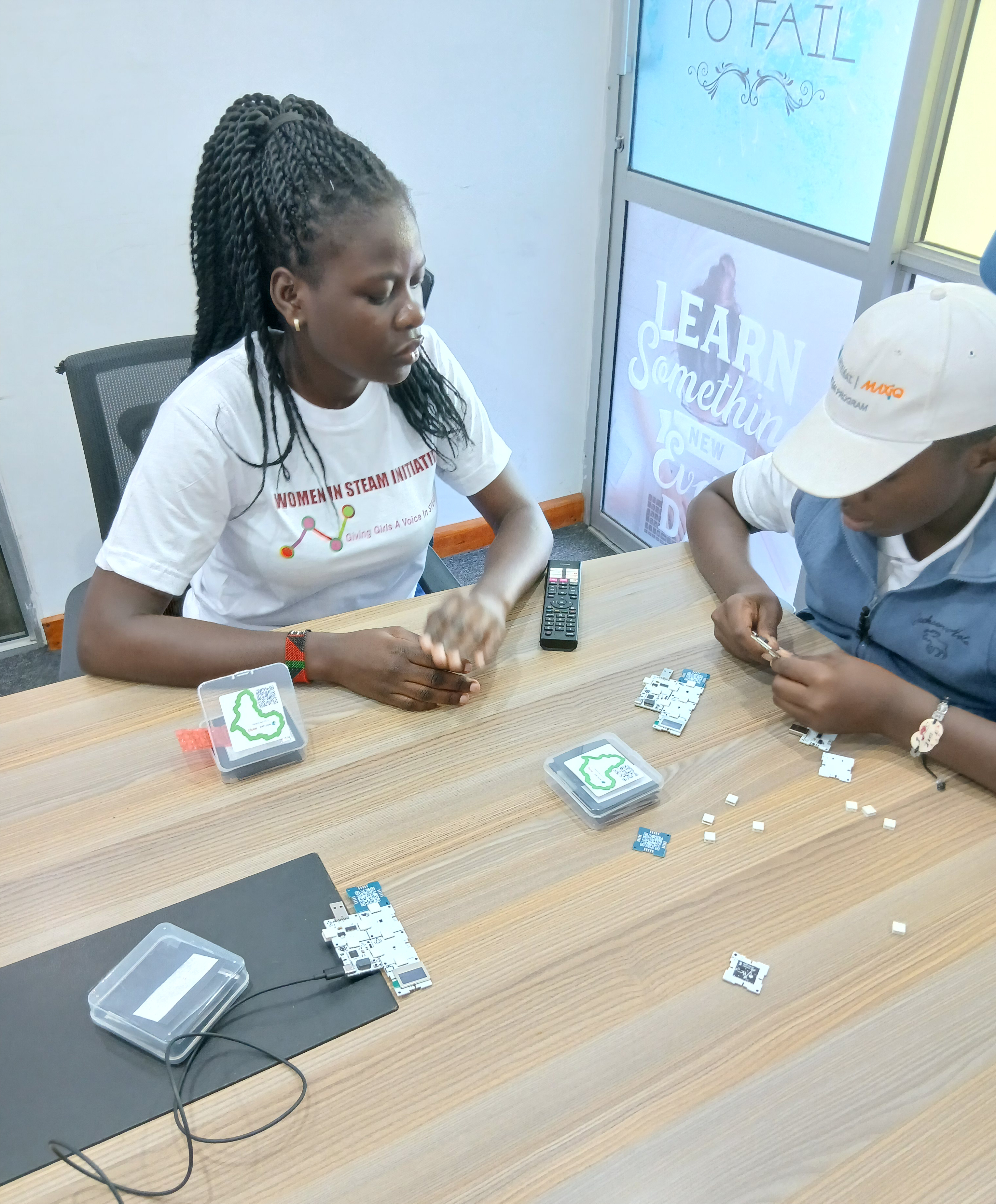
This work also contributes to a broader scaling approach: Space STEM Regional Hubs across Africa, beginning with East Africa (Kenya) and expanding to West and Southern Africa. Through its expertise in teacher training, curriculum development, STEM club implementation and hands-on learning models, the Women in STEAM Initiative is positioned to support teacher training rollout, integration of SES Space STEM modules into school STEM clubs, government engagement for curriculum alignment, regional competitions and showcases, and impact documentation and reporting.
Caroline Nyaga, Founder, The Women in STEAM Initiative, emphasizes: “Our focus is practical STEM experiences in coding and robotics, paired with mentorship that helps girls see themselves in STEM careers. Joining the SES Space STEM Programme in early 2025 strengthens our ability to bring space learning into schools and to extend outreach in rural and marginalised communities.”
“SES Space STEM supports practical learning with real-world relevance, while widening participation in STEM. Working with The Women in STEAM Initiative strengthens a credible, locally rooted pathway for girls to progress from curiosity to capability, and from capability to career options,” notes Hans Geldenhuys, Director for Africa, SES.
Judi Sandrock, Managing Partner, MaxIQ Space, adds: “MaxIQ Space partners with organisations that already have trust in schools and communities. The Women in STEAM Initiative brings a proven club model, mentorship and reach, which makes it possible to scale space-linked STEM activities while staying grounded in what works for educators and learners.”
Programme Focus:
- School STEM clubs that build coding and robotics capability, reinforced by space-themed challenges
- Mentorship that links STEM learning to career pathways, with a focus on girls and young women
- Competitions and showcases, including STEM storytelling
- Outreach that includes rural and marginalised regions, plus community-facing learning activities
- Alignment with Kenya’s Competency Based Curriculum and 21st-century skills


